
Inclusive vs Accessible: What’s the Difference?

Table of Contents
Inclusive vs Accessible: What’s the Difference?
Accessible spaces meet standards but inclusive spaces go further to ensure everyone can truly participate. Understanding the difference is key to better design.
Introduction:
In playground and recreational design, the terms “accessible” and “inclusive” are often used interchangeably—but they are not the same. While accessibility focuses on meeting specific standards and removing physical barriers, inclusion is about creating spaces where all users feel welcome, engaged, and able to participate fully. Recognizing this distinction is essential to designing meaningful, user-centered environments.
The Context:
With growing awareness around equity and universal design, communities are placing greater emphasis on creating spaces that serve people of all abilities. Accessibility standards such as barrier-free pathways and compliant surfacing—are now a baseline requirement. However, industry trends are shifting toward inclusive design, which considers social, sensory, and emotional experiences in addition to physical access. This evolution reflects a broader understanding that true usability goes beyond compliance.
The Process / Your Perspective:
When designing for accessibility and inclusion, our team takes a layered approach:
- Meeting Accessibility Standards First:
Ensuring pathways, surfacing, and layouts comply with required regulations and allow safe navigation. - Designing for Diverse Abilities:
Incorporating elements that support a range of physical, cognitive, and sensory needs. - Encouraging Social Interaction:
Creating spaces that promote cooperative and parallel play for users of all abilities. - Providing Sensory Variety:
Including features that engage touch, sound, and movement to support different play styles. - Eliminating Unintentional Barriers:
Looking beyond physical obstacles to identify design elements that may limit participation.
Example or Use Case:
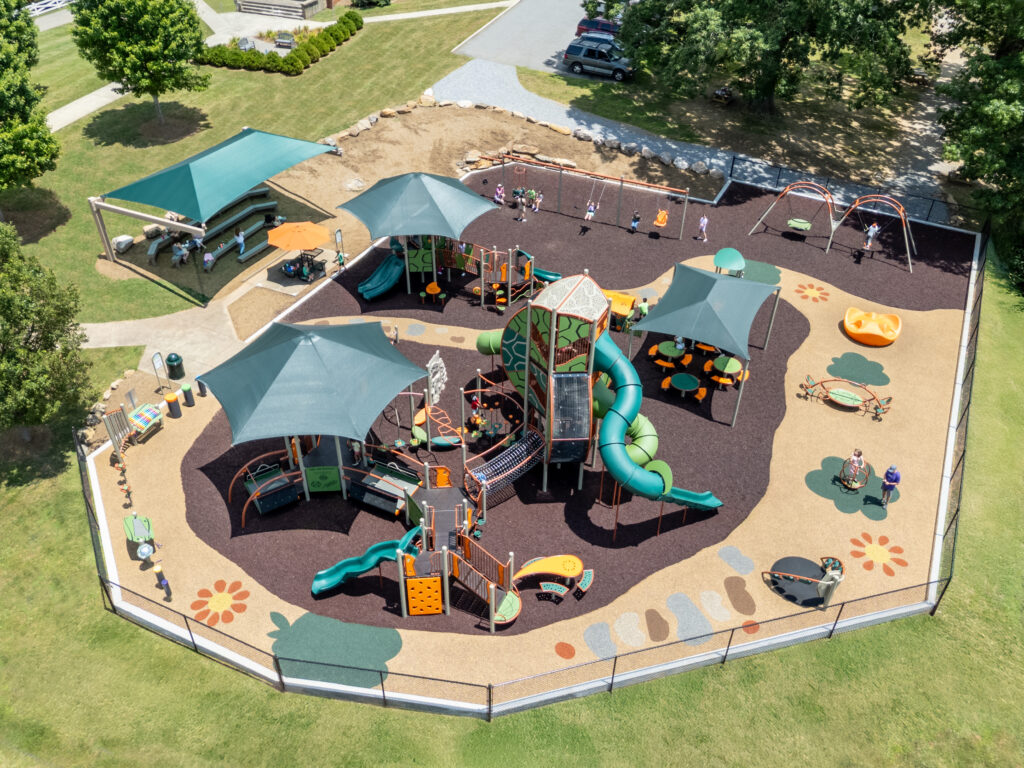
For the Akwesasne waterfront playground project, the community wanted to create a destination play space that reflected the natural setting while offering inclusive and engaging experiences for children of all ages and abilities. The design incorporated a large multi-level play structure, accessible surfacing, sensory and music play components, swings, climbers, and varied movement activities that encourage exploration, physical development, and social interaction. Located along the waterfront, the finished playground has become a vibrant gathering place where families can play together, children can challenge themselves in a safe environment, and the community can enjoy an inviting outdoor space designed for long-term use.
Practical Tips or Insights:
• Start with accessibility requirements, but don’t stop there.
• Design play experiences that can be used in multiple ways.
• Include ground-level activities to support all users.
• Incorporate sensory-rich elements for diverse engagement.
• Think about social inclusion, not just physical access.
Conclusion / Call to Action:
Looking to create a space that goes beyond accessibility? Our team can help you design inclusive environments that welcome, engage, and support every user.